Stop Playing Yourself: The Exhausting Performance of Maintaining Multiple Online Identities
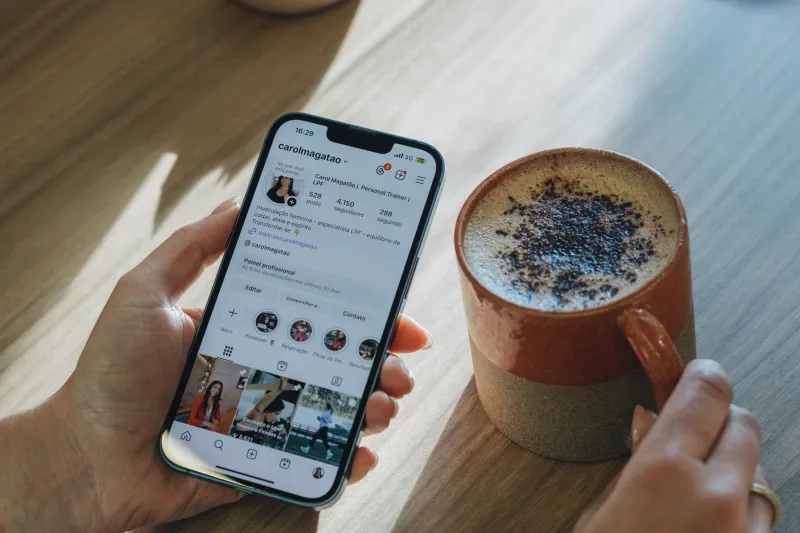
Somewhere between crafting your polished main feed post and stress-typing a 'real thoughts' Story for your Close Friends list, something broke. Not the algorithm. Not the app. You.
The promise was simple and kind of beautiful: segment your audience, control your narrative, be different things to different people without any of the messiness of, say, actually being a person. Instagram gave you Close Friends. Twitter gave you alt accounts. Discord gave you servers within servers within servers. The internet handed you a full wardrobe of selves and said, dress accordingly.
And for a while? It worked. Until it absolutely, spectacularly didn't.
The Persona Pyramid Scheme
Here's what nobody told you about maintaining multiple online identities: it scales terribly. What starts as a sensible division — professional stuff here, unhinged memes there, emotional vulnerability somewhere else entirely — quickly turns into an organizational nightmare that would make a project manager weep.
You have to remember which version of yourself posted what. You have to keep the tone consistent across each channel. You have to mentally track who knows what about you, and God forbid you accidentally share your 'messy real life' Story to your full following instead of your twelve-person Close Friends list. (A mistake that has launched a thousand anxious 3 a.m. story-delete spirals.)
Psychologists have a term for the cognitive load of managing different social presentations: self-monitoring. High self-monitors are great at reading a room and adjusting their behavior accordingly. But there's a ceiling. When you're self-monitoring across six different platforms, three different audience segments, and one increasingly resentful private alt account, you're not reading the room anymore — you're building the room, furnishing it, and then burning it down every time someone unexpected walks in.
The Close Friends Trap
The Close Friends feature was Instagram's gift to the oversharing generation — a velvet rope for your most intimate content. In theory, it's lovely. In practice, it became its own social minefield.
Who makes the list? Your actual close friends, sure. But what about your coworker you genuinely like but don't trust trust? Your college roommate who might screenshot? The mutuals who feel close enough for the real stuff but maybe not that real? Every addition is a negotiation. Every omission is a potential slight.
And then there's the content itself. What goes on Close Friends that doesn't go on your main? Complaints about work? Chaotic 1 a.m. thoughts? The crying selfie? Slowly, almost without noticing, the Close Friends list starts to feel less like a safe harbor and more like a slightly smaller stage with slightly lower stakes. The performance continues. The audience just got more intimate.
Users across Reddit threads and Twitter confessionals have been quietly copping to the same realization: the 'safe' space they built still felt like a performance, just with a cozier backdrop.
The Alt Account Burnout
For a certain stripe of internet user — particularly creators who built audiences around a specific niche — the alt account was the pressure valve. The place where the cooking content creator could post about their divorce. Where the fitness influencer could admit they hadn't worked out in three weeks. Where the professional advice-giver could just be bad at things for a minute.
But alt accounts come with their own exhausting logistics. They need content. They need a reason to exist. And the anonymity that made them feel free eventually starts to feel like a cage of a different shape. You're still curating. You're still performing. You've just changed costumes.
Some creators have started describing alt account maintenance as 'paying rent on an apartment you never sleep in.' You built it for breathing room and then filled it with a different set of obligations.
Burning It Down to Build Something Real
Here's where it gets genuinely interesting, and honestly, a little inspiring: a growing number of users — regular people and creators alike — are choosing chaos over curation. Not in a dramatic, scorched-earth way (though sometimes, yeah, exactly in that way), but in a deliberate, I'm done pretending kind of way.
Some are collapsing all their accounts into one. One feed. One voice. One messy, contradictory, fully human presence. The cooking content and the divorce and the fitness slumps and the professional wins all living in the same neighborhood. Radical honesty as a content strategy, but also just as a way of surviving the internet without losing your actual mind.
Others are going the opposite direction: total anonymity. Nuking the personal brand, deleting the curated archives, starting completely fresh under a name that means nothing to anyone. Not an alt account — a clean break. No audience expectations to manage. No persona to maintain. Just the weird freedom of being nobody for a while.
Both approaches are, in their own way, a rejection of the same thing: the exhausting fiction that a human being can be cleanly sorted into separate, audience-appropriate packages.
What Your Multiple Selves Are Actually Telling You
There's something worth sitting with here. The impulse to segment isn't vanity or deception — it's deeply human. We've always been different versions of ourselves in different contexts. You're not the same at Thanksgiving dinner as you are at a house party. That's just called being a person.
The problem isn't the segmentation. It's the scale. Offline, context-switching happens naturally, gradually, with real social cues to guide you. Online, you're managing it consciously, constantly, and at a volume that the human brain was simply not designed to handle.
When people talk about 'social media burnout,' they often mean the content treadmill — the pressure to post, to perform, to stay relevant. But a quieter, sneakier kind of burnout is the persona treadmill: the exhaustion of maintaining the architecture of multiple selves across multiple platforms for multiple audiences who all have different expectations of who you are.
The One-Feed Future (Maybe)
BijiBiji has always been a fan of the beautiful mess — the weird, the unfiltered, the genuinely human. And what's emerging from the Great Persona Collapse of right now looks a lot like that.
People are getting tired of the velvet rope. They're tired of managing the guest list. They're tired of performing intimacy for their Close Friends list and professionalism for their main feed and chaos for their alt and vulnerability for their private Discord and then waking up and doing it all again tomorrow.
Some of the most interesting, most-followed, most-talked-about presences online right now are people who just... said everything in one place. Weird and professional and sad and funny and contradictory and real, all at once, to whoever shows up.
It turns out the audience for 'fully actual human being' is enormous. Who knew.
So if you've been quietly side-eyeing your Close Friends list lately, wondering if it's worth the maintenance, wondering if the segmentation is helping you or just giving you a new set of boxes to perform inside of — maybe that feeling is data.
Maybe the most radical thing you can do online in 2025 is just be one person.
Weird. Wonderful. Unmanaged. You.