Your Home Screen Is Judging You (And Honestly? It's Right)
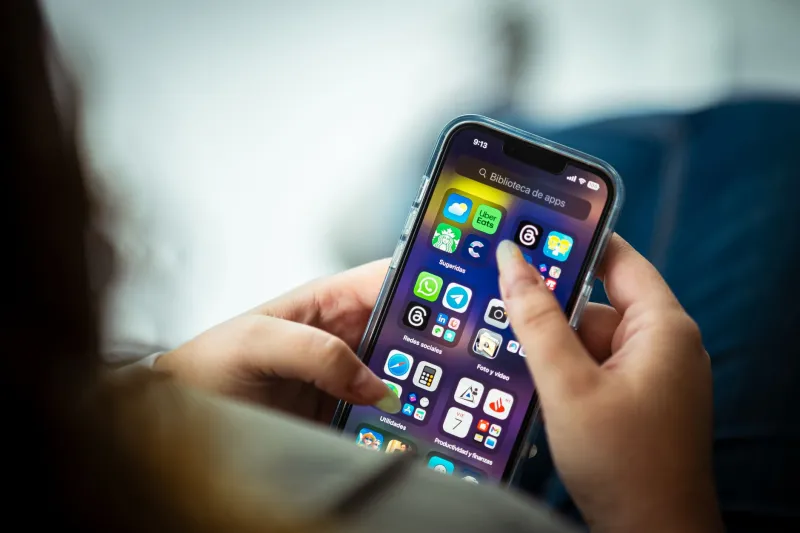
Picture this: It's 11 p.m. You're lying in bed, phone balanced on your chest, and you're doing that thing where you scroll through your own home screen like a stranger browsing a clearance rack. You pass the meditation app you opened once in 2022. You hover over the food delivery service you downloaded during a blizzard and somehow never deleted. You stare at the little icon for that social platform — you know the one — and think, why is this still here?
And then, in a moment of quiet, unremarkable revolution, you hold your finger down and tap "Remove App."
Congratulations. You've just participated in one of the weirdest cultural rituals of the current decade.
From Hoarders to Curators
For most of the smartphone era, the goal was accumulation. More apps meant more capability. More capability meant you were, theoretically, a more optimized human. We downloaded apps the way our parents collected tchotchkes — enthusiastically, without a plan, and with a vague sense that someday we'd need that particular ceramic owl.
But something cracked. Behavioral scientists who study digital habits point to what they call "cognitive clutter" — the mental tax your brain pays just knowing those apps exist, even if you never open them. It's the same reason a messy desk makes it harder to focus, except the desk is in your pocket and it buzzes at you.
"There's a real psychological weight to unused apps," explains the kind of UX designer who would absolutely describe their own phone as "intentional." "Every icon is an implicit commitment you made to a version of yourself that wanted to learn Spanish, track macros, and become a morning person. When you delete it, you're not just cleaning up storage. You're grieving a little. And then you're free."
Freedom, apparently, looks like four apps and a blank wallpaper.
The Status Flip
Here's where it gets sociologically spicy. Owning a lot of apps used to signal that you were plugged in, tech-forward, a person of the internet. Now? Pulling out your phone and revealing a sparse, almost monastic home screen has become its own kind of flex.
It's the digital equivalent of wearing a plain white t-shirt that costs $200. Restraint as luxury. Minimalism as achievement. The message is no longer look at everything I have access to — it's look at how little I need.
This isn't just vibes. The numbers back it up. App deletion rates have climbed steadily since 2021, and the demographic doing the most aggressive pruning skews younger than you'd expect — people in their mid-twenties and early thirties who grew up inside the app economy and are now staging a quiet mutiny against it.
There's even a corner of the internet (naturally) dedicated to home screen aesthetics. People post screenshots of their phones the way they used to post apartment tours. The comments are reverent. "Clean." "Goals." "What is the wallpaper?" It's aspirational content about having less aspirational content. The irony is not lost on anyone, and yet here we all are.
What You're Actually Saying When You Delete
Let's be honest about what this behavior signals, because it's more complicated than "I have good taste."
Deleting apps is an audit. And audits reveal things.
When you remove a fitness tracker you never used, you're admitting — to yourself, in the quiet of your own phone — that the version of you who was going to become a runner hasn't shown up yet and might not. That's a small but real act of self-honesty. When you delete a social platform because it makes you feel bad every single time you open it, you're prioritizing your actual emotional state over the sunk cost of the follower count you built there. That's not nothing.
UX researchers who study this phenomenon describe it as "values alignment" — the process of making your digital environment match who you actually are rather than who you imagined you'd become when you downloaded everything in a hopeful frenzy. It sounds clinical. But in practice, it feels a lot like finally cleaning out your closet and keeping only the stuff you'd genuinely reach for.
The apps that survive the purge tend to fall into a few categories: communication tools you use daily, creative outlets that bring you actual joy, and the one embarrassing game you will never, ever delete no matter what anyone says. You know the one.
The Apps That Survive Tell the Real Story
Here's the part nobody talks about in the thinkpieces about digital minimalism: the keeping is just as revealing as the deleting.
That group chat app you refuse to remove even though it drains your soul? You're not ready to let those people go. The niche community platform with forty active users that somehow makes you feel more seen than anything with an algorithm? That's telling you something about where your actual people are. The creative tool you open at midnight because you can't stop making things? That's your real self waving at you.
Your home screen, stripped of the aspirational clutter, becomes something close to a self-portrait. Not the curated, filtered, highlight-reel version — the actual one. The apps you use when no one's watching. The communities you return to without being prompted. The tools that feel like yours.
That's either terrifying or kind of beautiful, depending on what's left.
The Catch (There's Always a Catch)
Before we fully canonize the Great Unfollow as a spiritual awakening, a small note of honesty: some of this is still performance.
Posting your minimalist home screen to the very apps you claim to be curating is, to put it gently, a choice. The person who loudly announces they've deleted social media from their phone but checks it on a browser tab is not exactly a monk. And the pressure to have a "clean" phone can tip into its own kind of anxiety — a new standard to fail against, just with fewer icons.
The healthiest version of this trend isn't about achieving some perfect, photogenic phone. It's about the honest question underneath the deletion: Does this thing actually serve me, or am I serving it?
Ask that about every app. Ask it about every platform. Ask it about every notification you've allowed to interrupt your dinner.
Then decide what stays.
So What Does Your Home Screen Say About You?
Maybe it says you're finally tired of performing optimization. Maybe it says you've figured out, after years of trial and error and seventeen downloaded apps you've never opened, what you actually want from your phone and your time and your attention.
Or maybe it just says you ran out of storage.
Either way — the audit has started. And somewhere in the weird, wonderful chaos of figuring out who you are in a world that wants your screen time, choosing what to keep is one of the more honest things you can do.
Now if you'll excuse us, we have a ceramics app we've been meaning to open for fourteen months. It's probably fine.